
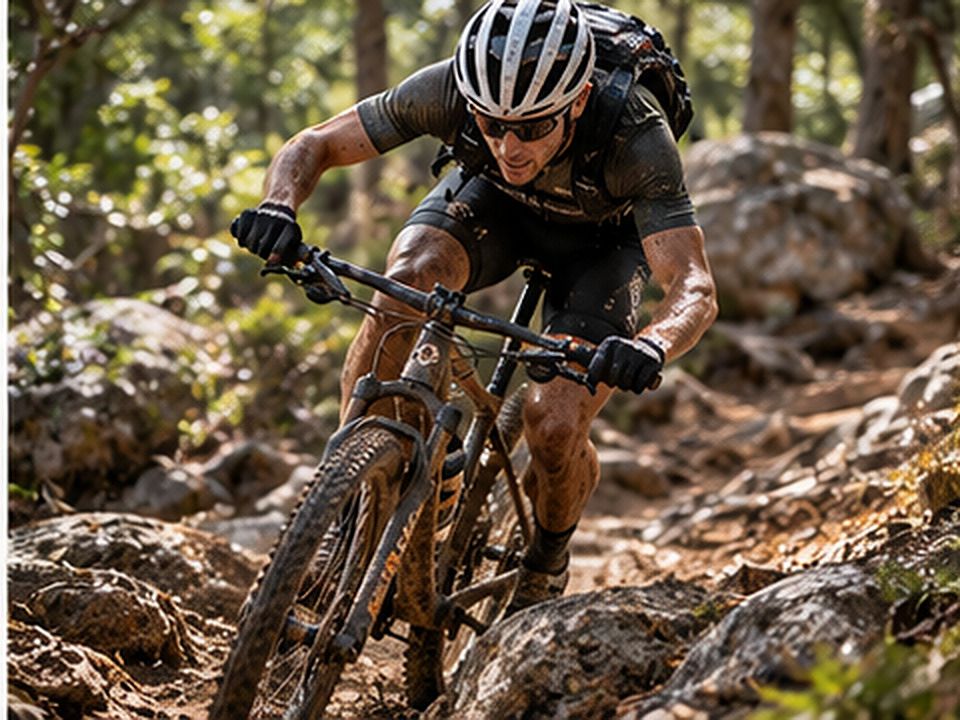
If you can produce the power but lose your line choice, braking control or traction when the race gets hard, are you really race-ready?
Modern cross-country Olympic (XCO) racing makes that question difficult to ignore. The 2026 UCI Mountain Bike World Championships in Val di Sole provided another example of the level of physical and technical demand involved in elite XCO. The useful MCC lesson is not to copy elite workouts. It is to understand that XCO performance depends on combining physical output with technical execution and decision-making under fatigue.
Fitness is only part of the problem
XCO racing repeatedly asks riders to change pace, climb, accelerate and then negotiate technical terrain.
A rider may be physically capable of producing the required effort but still lose performance if fatigue degrades line choice, braking, traction or judgement. Technical skill therefore cannot be treated as something that exists separately from conditioning.
The better question is not simply whether the athlete is fit enough to ride the course. It is whether they can still ride it effectively after repeated hard efforts.
Train the combination
Training should reflect the demands you intend to meet in competition.
For an XCO rider, that means developing the physical capacity to repeat hard efforts while progressively creating opportunities to execute technical skills when tired.
This does not mean making every technical session brutally hard. It means deliberately introducing the interaction between physical fatigue and technical execution.
For example, a rider might complete a controlled interval block and then perform a technical section requiring accurate line choice, braking and cornering. The purpose is not to create maximum exhaustion. It is to develop the ability to maintain skill when concentration and physical freshness are reduced.
Don’t copy elite training blindly
Elite racing provides useful examples of performance demands, but it should not automatically become a training prescription.
World-class riders have different training histories, technical abilities, recovery capacity and competition objectives. What works for an elite athlete may be inappropriate for a developing or recreational rider.
The transferable lesson is the demand, not necessarily the workout.
Young riders need a broader view
The same principle matters for developing riders.
Young athletes racing repeated XCO events should not be expected to peak for every start. Competition can be used as a development environment in which technical competence, pacing, repeatability and recovery are built across a season.
The goal is to develop a rider who can execute skills consistently, not simply produce one exceptional result.
The MCC coaching perspective
Fitness and technical skill should not be treated as separate silos when the event demands both.
The closer the athlete gets to competition, the more useful it becomes to train the interaction between physical effort and technical execution. But that specificity should be introduced progressively and in a way the athlete can recover from.
Athlete takeaway: don’t ask only whether you are fit enough to ride the course. Ask whether you can still ride it well after repeated hard efforts. If the answer is no, technical execution under fatigue belongs in the training conversation.
Source:
UCI. “2026 UCI Mountain Bike World Championships: Pidcock and Van der Poel join XCO line-up.” 20 August 2026. https://www.uci.org/article/2026-uci-mountain-bike-world-championships-pidcock-and-van-der-poel-join-xco-line-up/2y71CSnQ5SzMkYJcZlf6cB — source for the 2026 XCO World Championships context and elite XCO field. Technical-performance interpretation is MCC analysis.